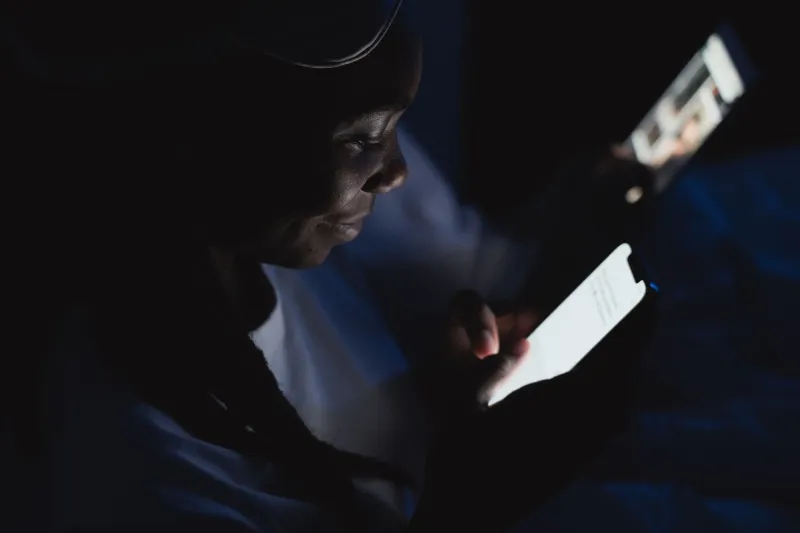
Nobody Wants to Be the Main Character Anymore, and Honestly? Let Them Cook
A few years ago, the internet had a very clear career path. You found a niche, you developed a persona, you posted a video where you said "I'm just a normal person who decided to—" and then you were a main character. There were aesthetics. There were mood boards. There was, invariably, a moment where the camera panned slowly across your face while a slowed-down song played.
In 2026, that entire format has the energy of a mall food court at 4 p.m. — technically still operating, quietly abandoned by everyone under 30.
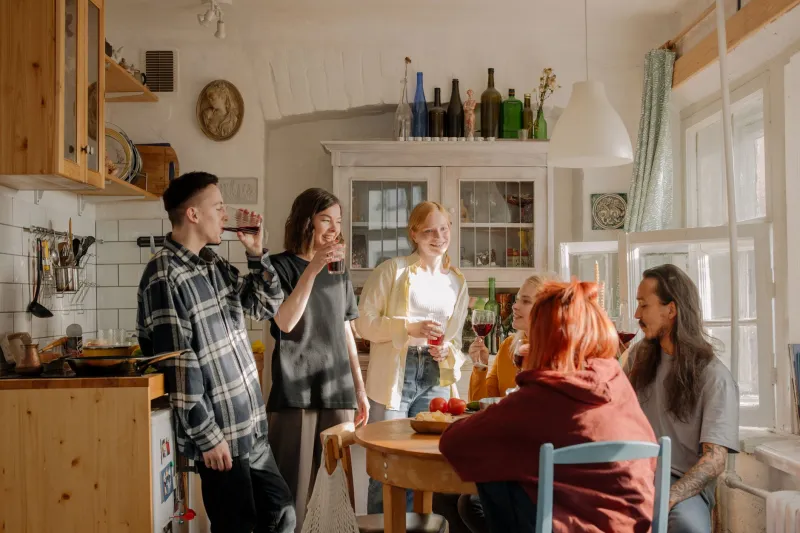
The main character is not dead, exactly. But the audience has stopped showing up for the solo act. What's getting forwarded, screenshotted, stitched, and quoted back in group chats right now is ensemble comedy: the sidekick, the guy in the background, the group project that goes catastrophically wrong, the four-person friend group where nobody is the protagonist and that's precisely the joke.
The Economics of Being the Guy in the Back
There's a reason this shift feels like relief. The main-character era asked a lot of its participants. You had to be aspirational. You had to have a journey. Your personality had to be legible enough to be branded and mysterious enough to seem interesting. Every grocery run was content. Every breakup was a chapter. It was exhausting to watch and presumably worse to live.
Side-character energy asks for none of that. The side character has no arc. They have a bit. They show up, they say the funniest line in the scene, they leave. There is no merch drop. There is no apology video. There is only the moment and the group chat that will be quoting it for the next eleven months.
And audiences have noticed that the supporting cast is simply more fun to be around. You can't project your own life onto a personal brand. You can absolutely project it onto the friend who shows up to the group trip with a neck pillow and zero information about the itinerary.
Everyone's Already Cast as the Funny One
The clearest sign of this shift isn't a single meme — it's the way people describe themselves now. Mention a friend group and you'll get an immediate role assignment: the planner, the chaotic one, the one who never responds but always shows up, the one who texts in paragraphs at 2 a.m. Nobody says "I'm the star." People are competing to be the bit player.
That's a real inversion. The status move used to be being seen. Now the status move is being reliable in a scene — the person who makes the group chat funnier, not the person who makes it about themselves.
Part of this is fatigue. The influencer economy spent a decade rewarding people for treating every interaction as an asset, and viewers eventually started noticing the transaction happening in real time. The moment an audience can feel the camera in the room, the room stops being fun. Ensemble content doesn't have that problem, because there's no single point of gaze. There's just a bunch of people being funny at each other, which is coincidentally what actual friendship looks like.
Group Chats Are the New Writers' Room
Here's the thing the industry keeps underestimating: most of the funniest stuff on the internet in 2026 isn't authored. It's reported. The screenshot of a family group chat melting down over a restaurant reservation is not a produced sketch. It's a found object, and it's funnier than anything a writers' room could script, because real people are relentlessly strange in ways that professionals can't fake.
That's why the ensemble model keeps winning. Solo creators have to manufacture stakes. Group dynamics generate them for free. Put three people in a car with a bad GPS route and you've got a full season of television. The comedy is structural, not personal. Nobody has to be charismatic. They just have to be in the bit together.
A Small, Necessary Caveat
Now, before the personal-brand defenders sharpen their keyboards: yes, ensemble comedy has its own failure mode. Side-character culture can tip into an allergy to sincerity, where the only acceptable emotional register is the ironic one and anyone who means something is instantly cringe. The group chat that only does bits eventually becomes a place where you can't say anything real. That's a real cost, and it's worth naming.
But there's a middle path. The supporting cast doesn't mean the absence of feeling — it means feeling is distributed. Somebody in the group has to be the one who says the nice thing out loud. Somebody has to be earnest so the rest of us have something to react to. An ensemble without a heart is just a green room.
Let Them Cook
The main-character era wasn't wrong about everything. It gave us momentum, and some genuinely great work came out of all that relentless self-directed ambition. But it also convinced a generation that every moment needed a caption and every friendship needed a business plan.
What's happening now looks, from where I'm sitting, like a course correction. The internet has rediscovered the oldest comedy technology there is: a group of people who find each other funny. No arc, no aesthetic, no personal brand. Just a scene with five people in it, where the funniest one gets the line and nobody checks the follower count.
The supporting cast is having its moment. Let them cook.