Screenshot or It Didn't Happen: America's Group Chats Are Running the News Cycle Now
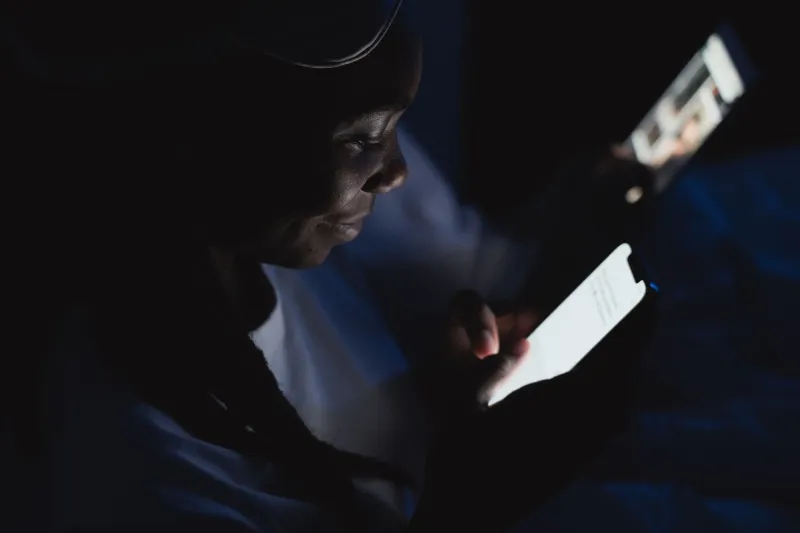
There is a specific kind of American morning now. You wake up, you squint at your phone, and before you have consumed a single headline from an actual newsroom, you have already formed a firm opinion about a situation based entirely on a 340-pixel screenshot forwarded by a guy you went to high school with. The screenshot has no attribution. It has no date. It has, if we're being honest, some compression artifacts around the edges that suggest it has been through at least four phones. And yet it has already won the argument.
Welcome to the new front page. It is not a website. It is a thread.
The Pipeline Moved and Nobody Sent a Memo
For most of the internet's life, the flow went roughly like this: something happens, a publication reports it, readers share the link, and discourse trickles outward. The link was the unit of currency. You shared a source. The source carried the credibility.
That pipeline has been quietly re-plumbed. Today the unit of currency is the artifact — the screen capture, the clipped reaction, the two-line text exchange with the names blurred out in MS Paint. The link now arrives after the discourse, usually as a joyless correction in a quote-tweet, like a chaperone showing up to a party that ended three hours ago.
Group chats are the accelerant. A single person with a good screenshot and a willingness to be a little reckless can move a narrative through a family thread, three work Slacks, and a Discord server before a reporter has finished their second paragraph. By the time a fact-check lands, the group chat has already moved on to a different screenshot, and the fact-check is being screenshotted and mocked as "the media, obviously."
Context Collapse Is the Whole Ballgame
Here is the thing about screenshots: they are technically evidence and structurally fiction. A screenshot is a true image of a real moment that has been surgically removed from everything that made the moment make sense. Who was the person talking to? Was it a joke? Was it a decade old? Was it a parody account with a typo in the handle?
Strip that away and you get context collapse — the phenomenon where a statement migrates into a new audience that has no access to the original frame. A vent in a private chat becomes a public confession. A sarcastic reply becomes a manifesto. A joke between two people who share a specific sense of humor becomes, in the wild, a felony.
And the wreckage is usually unequal. The person who gets screenshotted rarely gets to explain the frame, because explanation is boring and screenshots are not. The most shareable version of any dispute is the one with the fewest words, the sharpest contrast, and zero nuance. Nuance doesn't survive the forward button.
Why We Trust the Receipt Over the Report
It would be easy to blame this on gullibility, but that's not quite it. Screenshots feel trustworthy for reasons that are almost sensible. They're raw. They're unpolished. They don't sound like a spokesperson. After a few years of aggressively hedged corporate statements and brand accounts doing bits, a blurry text thread reads as more authentic than a press release, even when it's demonstrably less accurate.
There's also a speed dividend. Newsrooms are slow on purpose — verification, calls, legal review, the whole apparatus. Group chats are fast on purpose. In a culture that treats being late to a meme as a personality flaw, slow reads as complicit. So the receipt wins by default.
And then there's the social layer. Forwarding a screenshot is a small act of intimacy. It says: I saw this and thought of you. Forwarding a link to a news article says: here is homework. One of those gets you invited to the barbecue.
The Receipt Literacy Checklist
None of this means you have to log off and become a monk. It means developing a reflex. Before you let a screenshot colonize your worldview — or your group chat — run it through a quick pass:
- Find the edges. Cropping is editorial. If the capture starts mid-sentence or ends right before a punchline, someone chose those boundaries.
- Look for the handles. Usernames, timestamps, platform UI, and font consistency are the closest thing to a paper trail. A screenshot with no identifying chrome is a rumor wearing a lab coat.
- Ask what the screenshot is doing. Is it proving a fact, or is it delivering a vibe? Most viral receipts are doing the second thing while pretending to do the first.
- Check the date. Screenshots are immortal and frequently resurrected. Half of what goes viral this week happened during a completely different news cycle.
- Consider the reverse. If this exact screenshot existed about you, what would be missing from it?
- Wait one business day. This is the least fun advice and the most effective. A shocking number of viral screenshots do not survive 36 hours.
The Front Page Is a Thread Now
Here's the uncomfortable part: group chats are not a worse version of the news. They're a different medium, with their own grammar and their own failure modes, and pretending otherwise doesn't make anyone smarter. The screenshot isn't going anywhere. It's cheap, it's fast, and it fits in a thumb's reach.
What's up for grabs is whether we treat it like a punchline or like a source. The same artifact can be both — a genuinely funny piece of internet debris and a piece of evidence that deserves thirty seconds of skepticism before it gets forwarded to eleven people and a group called "Family (Do Not Mute)."
So the next time a screenshot lands in your thread with no context and maximum drama, enjoy it. Laugh at it. Maybe even send it along. But before you treat it as the front page, remember what a front page actually costs to produce — and what a screenshot costs to fake, which is, roughly, nothing.
Screenshot or it didn't happen is a great joke. It's a terrible epistemology. And in 2026, it's basically the national operating system.