The Boredom Economy Is America's New Prime Time, and the Programming Is Somebody Folding Laundry
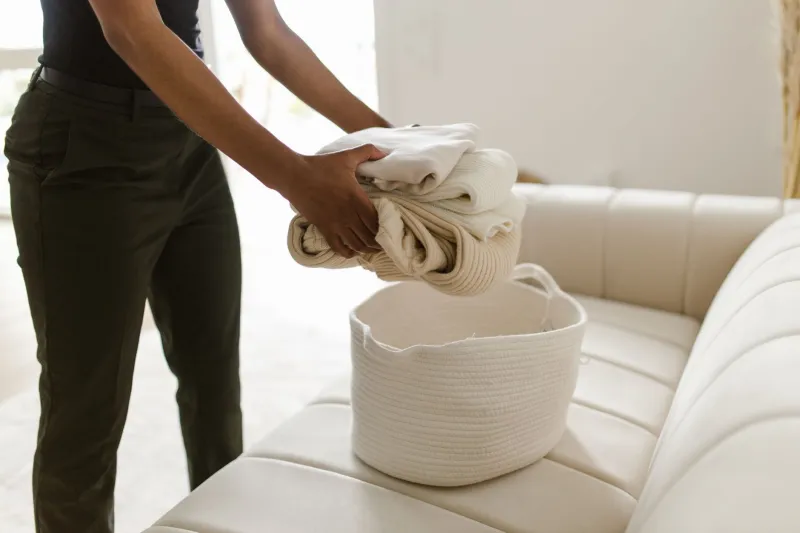
It's 11:47 p.m. on a Tuesday in November, and you are watching a man in Dayton, Ohio, fold a fitted sheet. He is losing. There are tens of thousands of you in the room, nobody is talking, and the chat scrolls at the speed of a lazy creek. It is, by a wide margin, the most relaxing 40 minutes you have spent since Labor Day.
You had options. There is a prestige drama with excellent coats waiting in your queue. There is a 94-minute video essay explaining why a 1998 animated movie is secretly about capitalism. There is a group chat demanding your opinion on a sandwich.
Instead you chose laundry. Real laundry. Real time. Visible lint.
The boredom economy is booming, and if you squint, it might be the most honest thing left on your feed.
First, Let's Define the Genre
The category has fuzzy borders. Some of it is slow TV's American grandchild: an eight-hour train ride, a snowstorm on a fixed camera, a fireplace with zero lore. Some of it is the ambient vlog — the 45-minute Target run, the soup being made with no music and no cuts, the drive to work with the radio off. And some of it is the mundane-task livestream, where a stranger irons shirts for a living while a few hundred people keep them company.
What links it all is a refusal. No hook. No jump cut at the three-second mark. No 'wait for it.' No reason to be there other than the fact that you'd rather be here than in your own head.
Some people file this under ASMR. It isn't, really. ASMR is engineered — triggers, whispers, deliberate tingles. This is closer to anti-content. The point isn't that something is happening. The point is that almost nothing is.
Why the Nothing Costs So Much
Here's the weird economic truth: nothing has become expensive. Every feed you own is a slot machine tuned by people with doctorates and dashboards — thumbnails that scream, captions that beg, edits timed to the second. Stimulation is free and infinite. Calm, on the other hand, has become the scarce good, like oat milk in 2019 or a restaurant table that doesn't require a reservation six weeks out.
So we did what humans always do when something good gets scarce. We started paying for it in the only currency the internet still accepts: attention.
Watching someone else knock out a small, boring task delivers a strange little cocktail. Part secondhand productivity — the dishes got done, and you didn't have to stand up. Part company — a person existed near you and didn't want anything. Part relief — no cliffhanger, no plot to be spoiled, no discourse to catch up on. You can leave mid-sock and nothing bad happens.
Researchers who study this call it parallel play: being alone together, the way toddlers share a rug without sharing a toy. Adults have quietly rebuilt it with a phone mount and a kitchen timer.
The Catch: Anti-Content Is Content Now
The problem with a genre built on 'nothing is happening' is that it is very easy to turn into a genre built on something. The moment the numbers go up, the machinery shows up. Suddenly the fitted sheet is folded under better lighting. Suddenly there's a thumbnail with a shocked face and a red arrow. Suddenly the towel guy has a merch drop and a podcast, and the whole thing is a franchise about how he isn't a franchise.
You can watch it happen in real time, and it's genuinely bleak. A video titled 'just making coffee' becomes 'I MAKE COFFEE FOR 8 HOURS (no talking)' becomes 'the coffee video everyone's talking about.' The three-second hook has arrived to ruin the soup.
The good news: the genre regenerates. For every ambient vlogger who hires an editor and a sound guy, there are fifty people quietly filming their Sunday errands with a phone propped on a sponge. The supply of boring days is, blessedly, endless.
The Money Is Interested, Politely
Advertisers adore this audience, because for once the audience isn't frothing. Calm viewers are pliable viewers. Shelf-stable products turn up in ambient grocery runs. Air purifiers, mattress toppers, linen sprays, a Dutch oven that appears in every third soup video. The pitch to sponsors writes itself: our viewers are relaxed, unskippable, and not currently arguing about anything in the comments.
There's a shadow here too. The second a mundane task becomes a stage, the task gets a little less mundane and a little more set dressing. Ask any chef who has been told to 'just cook like you normally would' while four cameras hover.
In Defense of Doing Nothing
Here's the case for the boredom economy, and I mean it: it gives people permission. Permission to do one thing at a time. Permission to spend a Tuesday night not optimizing. Permission to be boring in a public square that otherwise rewards being a brand.
In a year when every app is begging you to participate — post, comment, duet, stitch, buy — there is something quietly subversive about choosing the channel where a person just irons.
So yes, go watch the fitted sheet guy. He'll lose again tomorrow. The chat will stay slow. Your dishes will not get done, but someone else's will, and frankly, that's most of the way there.